


In the world of eCommerce, increasing Average Order Value is a constant goal for businesses seeking to boost profitability and return on ad spend. Yet even well-intentioned strategies can sometimes backfire if customer behaviour and product dynamics are not fully understood.
This eCommerce case study examines a real-life scenario where adjustments to delivery fees and the threshold led to a dramatic drop in conversion rate before ultimately improving profitability.
By exploring the challenges, test results, and the corrective actions taken, this eCommerce case study offers actionable lessons for any eCommerce business aiming to balance AOV and conversion rate effectively.
Understanding the Challenge of Low Profit Margins and Conversion
The eCommerce store in question faced a common problem: strong sales volume coupled with low profitability. Delivery fees were set at a minimal £0.99, barely covering the cost of shipping for low-value orders.
Coupled with a free delivery threshold that was lower than market norms, this created slim profit margins across a majority of transactions. The average order value hovered around £16.50, insufficient to make advertising spend and operational costs sustainable.
Profit margins that are low indicate that the business earns little from each sale after deducting costs. In this case, the low delivery fees directly contributed to the issue, and small transactions often resulted in losses rather than gains.
Understanding the causes of a low profit margin is critical before implementing AOV strategies. At this stage, it was essential to examine why conversion rates were sensitive to price and delivery changes and consider why conversion rates would drop in response to adjustments.
The Experiment with Delivery Fees and Thresholds


To address the AOV challenge, the team implemented two significant changes. The delivery fee was increased from £0.99 to a higher level, and the free delivery threshold was raised from a lower starting point to £25.
The hypothesis was simple: higher delivery costs would incentivise customers to increase their basket size to reach this, thereby raising AOV and overall profitability.
Free delivery thresholds are powerful levers in eCommerce. They can motivate buyers to add more products to their carts, creating a threshold effect in marketing that boosts average order value. A threshold strategy, when used correctly, balances additional revenue from larger orders against the risk of losing sales if the threshold feels unattainable.
How testing is crucial in eCommerce became evident as the team monitored the results. Challenges in eCommerce testing, including a single-product focus and necessity-based items, made the experiment particularly sensitive to consumer behaviour.
Immediate Results from the Changes
The results of the test were dramatic and immediate. While the average order value did increase slightly, by 2-5% to around £17, the conversion rate across the site dropped by approximately 70%.
This decline was especially pronounced for the store’s hero products, which previously generated the majority of revenue. A sharp drop in conversion rate indicates customers were reacting negatively to the overall cost.
Total spend on popular items exceeded expectations, leading buyers to abandon carts rather than increase their order. Despite a minor win in AOV, the overall revenue plummeted, highlighting the delicate balance between pricing, thresholds, and customer purchase behaviour.
Understanding why the conversion rate would drop in such scenarios is essential for making informed adjustments.
Customer Behaviour and Product Limitations
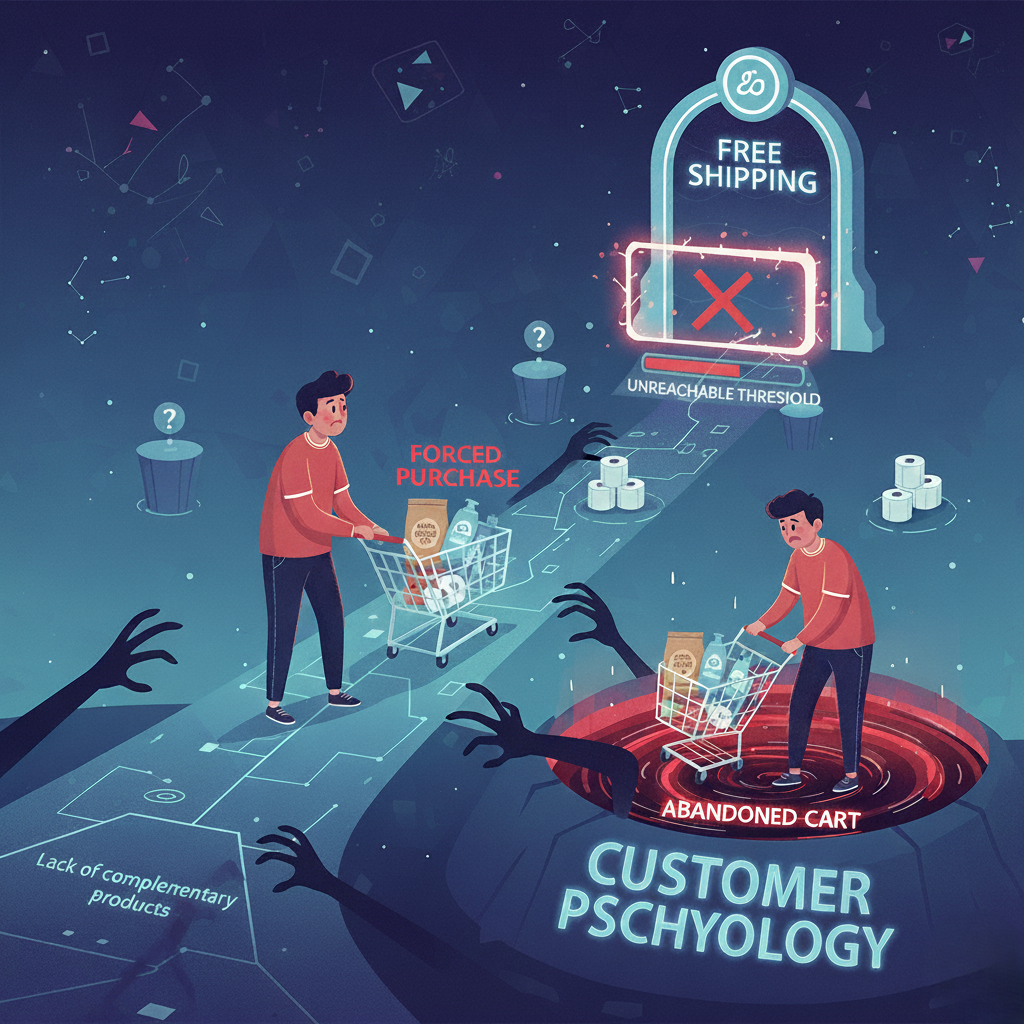
Analysis revealed several reasons customers did not adjust their behaviour to meet the new thresholds. First, the products were necessity items rather than impulse purchases. With long shelf lives, customers rarely needed multiple units at once. Buying more than needed simply to save on delivery costs was not appealing.
Second, the store lacked complementary products that could naturally increase basket size. Unlike larger retailers, there were no simple add-ons to help customers reach the delivery threshold without feeling forced. Attempting to push customers beyond their immediate need created friction and encouraged abandonment.
Common mistakes in targeting AOV include ignoring the nature of products and customer purchase patterns. Customers respond positively to free shipping only when thresholds feel reasonable. Misaligned thresholds can reduce conversions despite minor gains in order value, proving that the interplay between fees, incentives, and customer psychology is critical.
How Adjusting the Threshold Recovered Conversions
The solution was a simple, data-driven adjustment. The delivery threshold was lowered from £25 to £20, aligning it more closely with the store’s hero products. This change restored conversions to previous levels and maintained the slight increase in AOV.
Incremental testing proved essential. Rather than implementing large changes simultaneously, observing customer reactions and gradually modifying fees or thresholds allows businesses to increase profitability without jeopardising conversion rates.
After the adjustment, profitability improved on both small and medium-value orders. Understanding how to improve profitability in eCommerce and the steps to improve eCommerce profitability became apparent through careful monitoring and adaptation.
Businesses looking to fix a low eCommerce conversion rate should focus on aligning price strategies with customer expectations, testing carefully, and using data to guide decisions. Even minor adjustments to thresholds or pricing on hero products can restore sales while maintaining improved margins.
Key Takeaways for Your eCommerce Strategy
This eCommerce case study underscores several essential lessons for eCommerce operators. Test incrementally to avoid catastrophic losses, understand the positioning of hero products in relation to delivery thresholds, and balance perceived value with additional costs. Failed tests provide insights that can inform profitable strategies in the long term.
By evaluating these thresholds, product types, and customer behaviour, businesses can design pricing and incentive structures that increase AOV without compromising conversion rates.
Knowing how testing is crucial in eCommerce allows businesses to refine strategies methodically. The focus should always be on sustainable profitability, not short-term gains, ensuring that every adjustment contributes to stronger overall results.
Conclusion
Managing average order value, conversion rate, and delivery thresholds requires careful strategy and constant testing. This eCommerce case study demonstrates how small adjustments can have dramatic effects on customer behaviour and overall performance.
Auditing your free delivery thresholds and hero product pricing can ensure increases in order value do not come at the expense of conversions, ultimately supporting higher profit margins and long-term growth.
By understanding why the conversion rate would drop and applying insights to improve eCommerce profitability, businesses can achieve sustainable, data-driven results.