In this cautionary tale, I am going to reveal a real-life cost to conversion rate optimisation services—or rather, the cost of failing to manage them correctly.
Why on earth wouldn’t you work to double the number of leads you get through a Google Ads campaign or your organic traffic? Specifically in paid search, increasing your landing page conversion rate by 50% (for example, from 2% to 3%) creates a massive compounding effect. If you are running a target CPA bidding strategy, your bid can increase by 50% whilst still efficiently achieving the goal.
That 50% increase in bid means that your ads show at the top of Google Search 100% more often, delivering double the ad visibility. When ads are at the top of the search results, the click-through rate is much higher—let’s say twice as high. That means you could get 4x more clicks at a 50% higher CPC and spend 6x more, but ultimately, you will get 4x more leads.
That is the benefit of optimisation. But in this case, it went the other way. Badly.
The Context Of Driving Blind
For years, my PPC team has been asking for reliable conversion tracking in Google Ads from a client’s IT team. We do not have site access. The website is multinational and is controlled and managed by a team in the USA. Our campaigns are for the European branches, who can add content to the website but are not able to make significant changes or implement tracking.

Operating like this is like putting a highly optimised driver in a terrible Formula 1 car with zero telemetry data. Because the site uses different methods of conversion across different forms, we face enormous challenges in measuring and scaling performance. We rely entirely on anecdotal information rather than hard data, which means we are only “alerted” to changes in lead quantity by the client.
The campaigns actually perform brilliantly and consistently deliver high-value leads into the business. This advertiser is arguably a market leader in its field. We just cannot measure it to scale up as much as we would all like.
What Killed The Sales Pipeline
Because we have no reliable tracking, we were alerted to a massive problem directly by the client: “We have had virtually no leads through for a month. Is something broken?”
Yes, something was definitely broken. An entire £500,000 digital marketing pipeline across the whole of Europe was completely wiped out. When you face a sudden Google Ads drop in conversions, you must run a rigid diagnostic check to isolate the fault.
- Google Ads Performance: Did something change in Google Ads campaign management? Check your ad impressions, average rank, and click-through rate. Are specific keywords dropping in traffic? In this case, everything was perfectly within normal parameters.
- Google Analytics Data: Has traffic from organic, direct, or email sources dropped significantly? Check your Google Analytics UTM tracking to see if the bounce rate has increased on any pages involved in the conversion process. Again, the data looked completely fine.
- Market Conditions: Has the search volume for your keywords dropped? You must consider environmental factors; in F1, your lap times suffer if the track temperature drops or it starts raining. Check Google Trends for shifts in search behaviour, but in this case, there were no significant changes.
- Landing Page URLs: Have the addresses of the landing pages changed? In Google Ads, ads are given a destination link, and you must check your final URL expansion settings. If a page changes, the old URL should be 301 redirected. The pages had been moved here, but they were redirected correctly.
- Landing Page Design: Were any changes made to the layout, the text, or the conversion form? Untested visual changes drastically impact what is cpl (cost per lead) and the total quantity of leads you receive.
- The Technology: Perhaps the site is converting, but the leads are not being delivered to your system. Without access to the change history, it is impossible to know who changed what and when.
The Disconnect Between IT And Marketing
It felt like either the landing page or the tech was the culprit. Next, we had a meeting with five attendees—some from my team, some from the tech team, and the project sponsor. That meeting lasted an hour, arguing over what the cause might be with zero data to rely on, resulting in a frustrated “We don’t know; let’s go back to the IT team and try and work it out.”
Over the course of the next two weeks, a 5-6 person email thread unfolded involving some very expensive senior people. It generated around 40 emails just to review the change history, and I am sure there were dozens more internally across the tech team. It turns out there was no documented plan, no proposal, no sign-off, and absolutely no testing.
Finally, there was a realisation from the IT team: they had changed the primary call to action and the form from a “Quote Request” to a “Demo Request”.
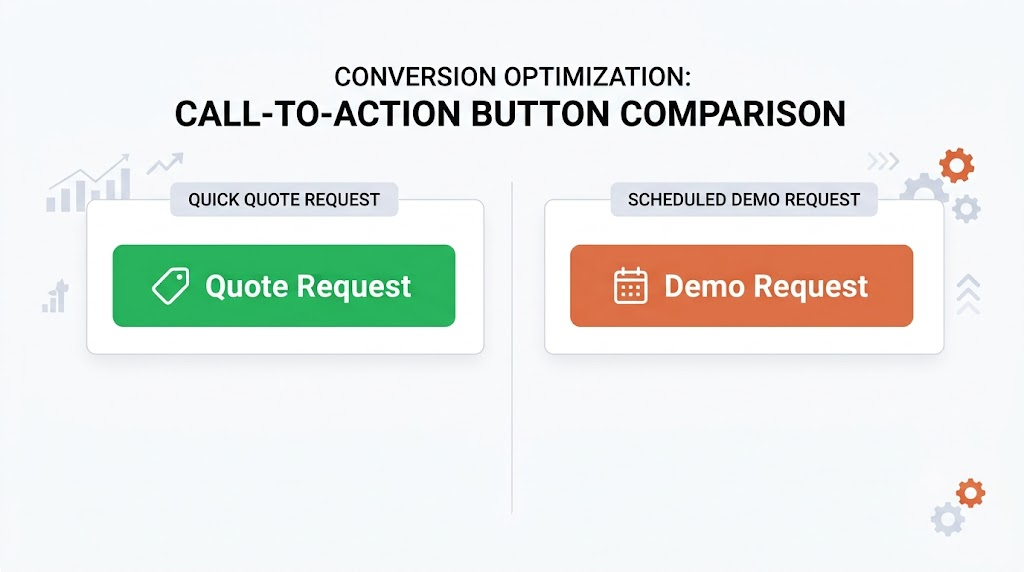
They assumed that was the same thing. It is not the same thing. People do not behave the same way, and users will not just “work it out for themselves”. A quote implies immediate pricing; a demo implies a long, scheduled software walkthrough. If the intent does not match, users leave and go to a competitor site which is only a few clicks away. Does this change actually deliver what we want to deliver? No.
The business went through a six-week period across the whole of Europe with virtually no leads, all because someone changed something which seemed simple.
Lessons Learned From A Conversion Disaster
This pipeline collapse highlights exactly how to troubleshoot Google Ads and why cross-department visibility is mandatory.
- Conversion Tracking Is Critical: Without tools like offline conversion tracking or reliable site pixels, campaign performance cannot be monitored or scaled. Worse still, when an issue arises, you spend dozens of man-hours investigating “maybes” rather than analysing data to instantly identify when the problem began.
- Communication Is Mandatory: Share plans with stakeholders that may be affected by what you are about to do. Get sign-off before proceeding, and ensure close monitoring of leads before and after any deployment. Keep a change history in a shared Google Sheet or annotate it directly in your analytics dashboards.
- Test Everything: It is the web page that converts, not the click. If you want to improve website conversion rate, do not rely on guesswork or assumptions. Test your implementation through rigorous A/B testing of landing pages and prove it with hard bounce rate and conversion data.
Conclusion
A Google Ads sudden drop in conversions is rarely a mystery; it is almost always a failure of telemetry and communication. You cannot simply throw more budget at a broken user journey and expect your sales pipeline to recover. You must secure your tracking architecture, align your IT and marketing teams, and ensure every single landing page change actually serves the user’s immediate intent.
If you are experiencing a sudden drop in performance and need to uncover where your budget is bleeding, let’s arrange a consultation for your Google Ads account to isolate the exact friction points.