Website Launch Checklist: Pre and Post-Launch
Launching a website is an exciting endeavour, but success lies in meticulous planning and execution. From pre-launch preparations to post-launch optimisation, here’s a comprehensive checklist

Your website cannot grow if it is slow
Tillison drastically improved the speed of our WordPress site, increasing conversion rates substantially.”
Stephen Blamire – Maslow Data
Improving page speed increases revenue
If your WordPress site is slow, your visibility and conversions are being held back.
Our page speed optimisation work fixes the system behind your performance so your site loads fast, ranks better and turns more visitors into customers.
We are here to support your progress
Page speed directly affects how your WordPress site performs in search results.
More importantly, it affects how many visitors stay, engage and convert. A slow site is a system problem that impacts every marketing channel.
Every extra second of load time can cause:
Your WordPress Site Deserves Better Performance
Years of work on WordPress performance have shown us one thing. Sites do not lose customers because of design. They lose them because the system behind their speed is broken.
We fix that system. A faster site keeps visitors engaged, increases conversions and supports real commercial growth for your business.
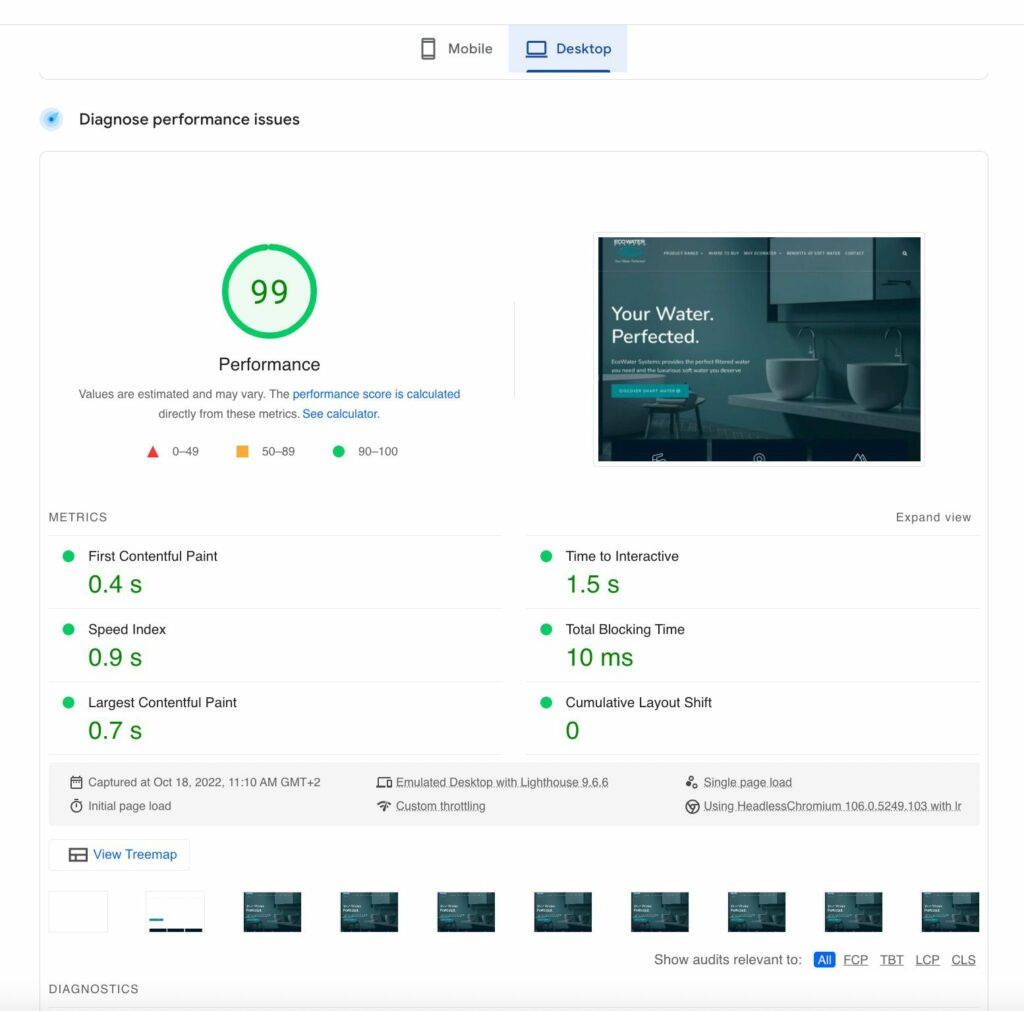
This improvement for EcoWater Systems lifted their site from slow and inconsistent to fast and revenue-ready. Their scores moved from 25 on mobile and 70 on desktop to an industry-leading performance.
What actually improves WordPress performance
Your hosting environment plays a major role in page speed. We ensure your site runs on infrastructure that supports fast load times, reliability and consistent performance under traffic.
Unnecessary redirects slow users down before a page even loads. We remove friction in the journey so visitors reach the content they requested without delay.
Too many or poorly configured plugins slow WordPress sites dramatically. We reduce bloat and ensure every plugin serves a clear purpose within the system.
We improve how your content is delivered to users based on location. This reduces load time and improves consistency across devices.
Large uncompressed files increase load time. We streamline and compress your code so browsers load pages faster and more efficiently.
Images are often the biggest cause of slow pages. We reduce file size without damaging quality, so pages load quickly while still looking professional.
Speed problems do not come from one issue. They come from a system that is not working as it should. When you trust us with your WordPress site, we take responsibility for fixing that system Every change we make is designed to improve performance measurably and support real business outcomes.
What you can expect:
Yes. Too many plugins or poorly built plugins slow WordPress sites significantly. Speed issues usually come from how plugins interact with the wider system, not from one plugin alone. We review what is installed, remove unnecessary bloat and ensure the remaining plugins work efficiently together.
Speed is affected by hosting quality, code structure, plugins, images, caching and how content is delivered to users. Most slow sites suffer because these elements are not working together as a single system.
Yes, Faster websites keep users engaged for longer and reduce friction in the journey. This leads to more enquiries, purchases and completed actions.
Speed improvements often deliver conversion gains without increasing traffic.
A strong WordPress site should load quickly enough that users do not notice any delay. In practical terms, faster load times consistently lead to better engagement, stronger rankings and improved conversion rates.
Performance can be measured using tools such as Google PageSpeed Insights and Lighthouse. However, raw scores do not tell the full story. Understanding how speed affects real users and conversions is far more important than chasing numbers.
– Page Speed Insights (Google)
– GTMetrix
– Pagespeed Compare (we love this)
Yes. Images are often the largest files on a page. Poorly optimised images slow load times significantly. Reducing file size while maintaining quality is one of the fastest ways to improve performance.
Why is WordPress page speed optimisation important? Speed affects rankings, user experience and revenue. If your site is slow, users leave before engaging, and search engines rank you lower. Optimising speed removes these barriers and supports growth across every marketing channel.
Long load times reduce engagement and increase bounce rates. This limits conversions and weakens the impact of your SEO, PPC and content efforts. A fast site allows your marketing system to work as intended.
We improve performance by fixing the full system. This includes hosting setup, plugin optimisation, code compression, image handling and delivery configuration. Every change is made with commercial outcomes in mind.
We assess which plugins are essential, which are slowing the site down and how they interact. We remove what is unnecessary and optimise what remains so the site performs faster without losing functionality.
Find out what else we can do for you
Improve search visibility and attract higher intent traffic with SEO that supports performance, speed and long-term growth.
Create a site that loads quickly, builds trust and converts visitors into customers without friction.
Build internal capability with practical SEO training that helps your team make better decisions and avoid costly mistakes.
Increase the number of visitors who take meaningful action by improving usability, clarity and flow across your site.
Recent Web Posts

Website Launch Checklist: Pre and Post-Launch
Launching a website is an exciting endeavour, but success lies in meticulous planning and execution. From pre-launch preparations to post-launch optimisation, here’s a comprehensive checklist


SSL Impact on Page Speed Explained
SSL (Secure Sockets Layer) is a security protocol that encrypts data sent between a user’s browser and a web server. In other words, SSL helps
How Cache Control Improves Page Speed
What is Cache Control? Cache control is a mechanism used by web servers and web clients (such as browsers) to control how frequently and for

Upgrading Legacy JavaScript for Improved Page Speed
Legacy JavaScript can have a significant impact on page speed, as it can slow down the performance of your website and you might see recommendations