
Many businesses spend substantial budgets on Google Ads yet see few meaningful results. The problem is rarely the ads themselves or the cost per click. More often, it is the lack of proper tracking and data that causes campaigns to underperform.
Conversion tracking in Google Ads forms the foundation of every successful campaign. Without it, Google’s artificial intelligence does not know which actions are valuable, and budgets are often wasted on clicks that do not generate business.
When conversion tracking is correctly implemented and combined with high-value bidding strategies, optimised landing pages, and data-driven attribution, campaigns can transform from a cost burden into a reliable engine for growth.
Why a Conversion Tracking in Google Ads Setup is Essential
Conversion tracking setup is the first step to ensure that Google can measure and optimise for valuable actions. Every action that counts, such as completing a form, making a phone call, or tapping a WhatsApp message, should be carefully defined.
Advertisers and business owners often make the mistake of using automated bidding strategies without tracking in place, assuming Google will automatically deliver leads. This is like asking a driver to achieve the fastest lap without giving them a stopwatch.
Proper conversion tracking setup ensures that every click is measured and contributes to business outcomes. Tools like Google Tag Manager or native Google Ads conversion tracking can capture all interactions accurately.
Maximise Conversion Value in Google Ads
Not all conversions are equal, which is why using Maximise Conversion Value in Google Ads is crucial. Assigning values to different types of conversions ensures that the system prioritises interactions that generate the most revenue.
For example, a WhatsApp tap may be worth £15, an inquiry form £150, and a direct booking £300. By assigning these values, the AI can allocate spend efficiently, paying more per click for high-value leads and less for lower-value interactions.
This approach ensures that campaigns drive revenue, not just raw conversions.
For instance, if a campaign receives 80 WhatsApp taps in a month, only 20 may lead to actual conversations, and perhaps 10 bookings result from those conversations.
Dividing the total revenue from those bookings by the number of taps allows advertisers to calculate the true value of each WhatsApp interaction. This ensures the AI is trained to prioritise leads that are most likely to generate revenue.
Google Ads Offline Conversion Tracking
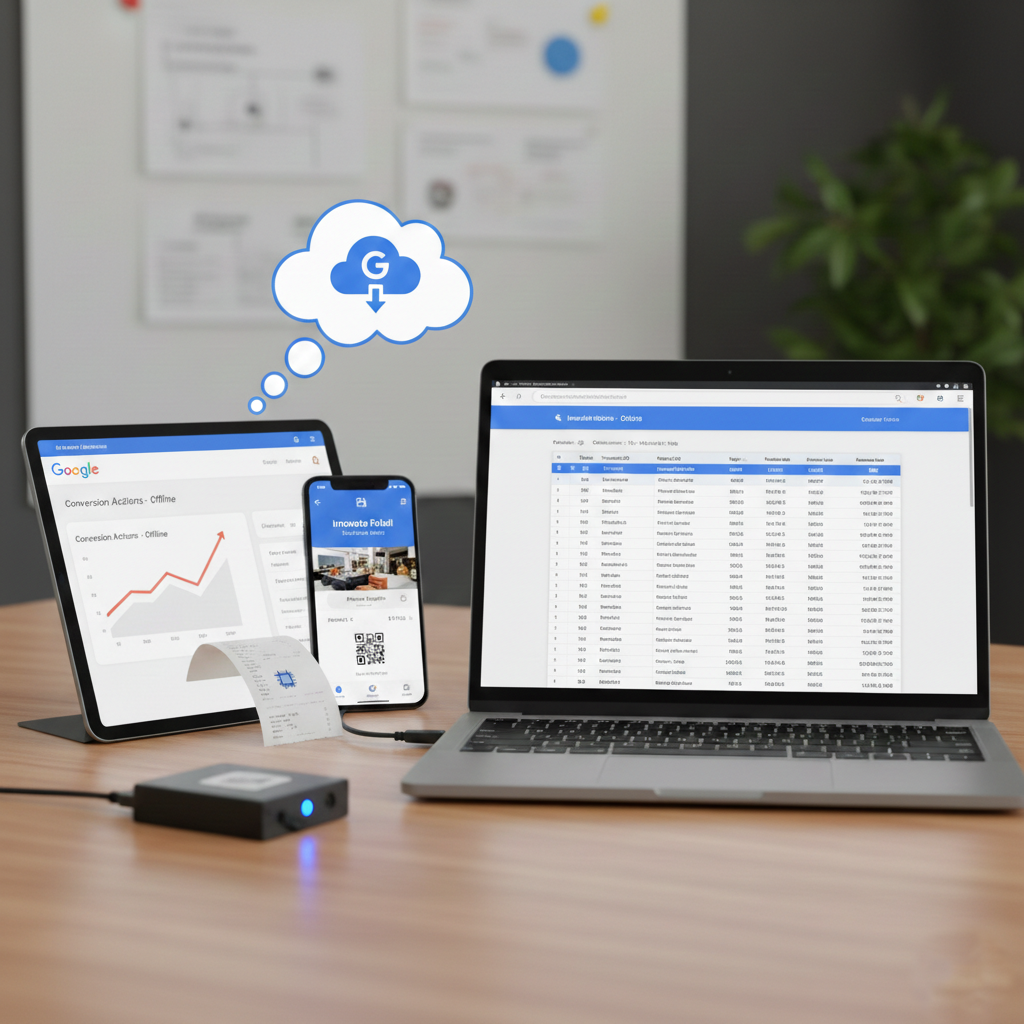
Offline conversion tracking allows advertisers to measure interactions that happen outside of the website, such as phone calls, in-store visits, or completed bookings recorded in a CRM.
Understanding what offline conversion tracking is and implementing it ensures that all revenue-driving actions are counted. Without offline conversion tracking, campaigns may underreport results, making automated bidding strategies less effective.
Integrating offline conversions with Google Ads gives a complete picture of performance and allows for better optimisation of the campaign.
What is Google Ads Learning Phase and How Long Does it Last
The Google Ads learning phase is when the system uses your conversion data to learn which users are most likely to complete valuable actions. During this phase, the AI is testing traffic and optimising for patterns.
How long is Google Ads learning phase? Google recommends a minimum of 15 conversions per month to exit the learning phase, but experts suggest aiming for 30 conversions per month. For peak performance, 150 conversions or more is ideal.
Understanding the Google Ads learning phase duration helps advertisers and business owners know when automated bidding strategies, such as Maximise Conversions or Target CPA, are ready to perform optimally.
Without enough data, the system may overbid on low-value clicks, wasting budget. Starting with Maximise Clicks and tightly targeted keywords allows campaigns to accumulate the necessary data, ensuring that automated bidding works effectively when sufficient data is available.
Avoiding Brand Term Traps with Google Ads Brand Exclusions



Campaigns often inadvertently optimise for brand searches, which typically include existing customers. While this increases reported conversions, it does not generate new revenue. Setting up Google Ads brand exclusions ensures that the AI does not overinvest in traffic that does not produce new business.
For example, 90% of conversions from a poorly segmented campaign may come from people searching the brand name. Using brand exclusions or creating dedicated brand campaigns keeps the focus on new leads and maximises campaign efficiency.
Where to Add Negative Keywords in Google Ads and How to Use Them Effectively
Negative keywords prevent irrelevant clicks, ensuring campaigns only spend budget on high-value traffic. Advertisers often ask where to add negative keywords in Google Ads. They can be applied at campaign or ad group level to filter out search terms unlikely to convert.
Using negative keywords on Google Ads improves conversion rates, reduces wasted spend, and provides cleaner data for AI optimisation. By excluding irrelevant traffic, automated bidding strategies like Maximise Conversions and Target CPA become more precise and cost-effective.
Conversion Rate Optimisation and Landing Pages

Even the best campaigns will underperform without high-converting landing pages. Conversion rate optimisation and landing pages go hand in hand. Optimised landing pages include compelling offers, clear call-to-action buttons, professional visuals, social proof such as testimonials or reviews, and fast load times.
Competitors with higher conversion rates can afford higher bids, making it critical to focus on landing page performance. For instance, if a competitor converts at 10% per page, they can afford £5 per click, while your 5% conversion rate only allows £2.50 per click. Improving landing pages allows campaigns to compete more effectively and maximise ROI.
Understanding Ad Rank in Google Ads and Cost per Acquisition
Ad rank in Google Ads determines your position on the search results page, which directly affects visibility and click-through rates. A high ad rank increases the likelihood of conversions, while a low rank reduces traffic.
Understanding what the cost per acquisition is in Google Ads helps advertisers set realistic bidding targets. If the top of page cost is £5 per click and your conversion rate is 5%, the cost per acquisition is £100.
If your target CPA is £50, Google will lower bids, reducing ad rank and triggering the death spiral where conversion rates drop further. Optimising landing pages, offers, and targeting ensures sustainable ad rank and CPA performance.
Click Through Rate vs Conversion Rate
Many advertisers confuse click-through rate with conversion rate. Click-through rate measures engagement with the ad, while conversion rate measures actual revenue-generating actions.
Campaigns with high CTR but low conversion rate waste budget. Focusing on both CTR and conversion rate ensures campaigns attract the right traffic and convert it effectively.
Google Ads Data Driven Attribution
Using Google Ads data driven attribution assigns proper credit to touchpoints across the conversion path. This ensures that campaigns are optimised not only for the last click but for all interactions that lead to conversion.
Data driven attribution improves bidding decisions, helps allocate budget efficiently, and enhances overall campaign performance.
Google Ads Target CPA
Target CPA bidding strategies rely on accurate conversion tracking and sufficient conversion data. The AI automatically adjusts bids to achieve the target CPA, but only if enough data exists to guide the system.
Without proper tracking, the system cannot differentiate between high-value and low-value actions, resulting in wasted spend. Combining target CPA with conversion values, brand exclusions, and landing page optimisation allows advertisers to achieve predictable growth.
Why Do You Need Conversion Tracking in Google Ads?
Google Ads is a powerful tool, but it is not a magic solution. Without proper conversion tracking setup, campaigns waste money and fail to deliver results.
Understanding what is the Google Ads learning phase, implementing offline conversion tracking, using brand exclusions, adding negative keywords, optimising landing pages, and applying data-driven attribution all ensure campaigns focus on high-value traffic.
Combining these strategies with Maximise Conversion Value in Google Ads and Target CPA allows campaigns to drive measurable revenue. Properly implemented, conversion tracking in Google Ads ensures that every pound spent contributes to predictable business growth.